Release date: September 23, 2026
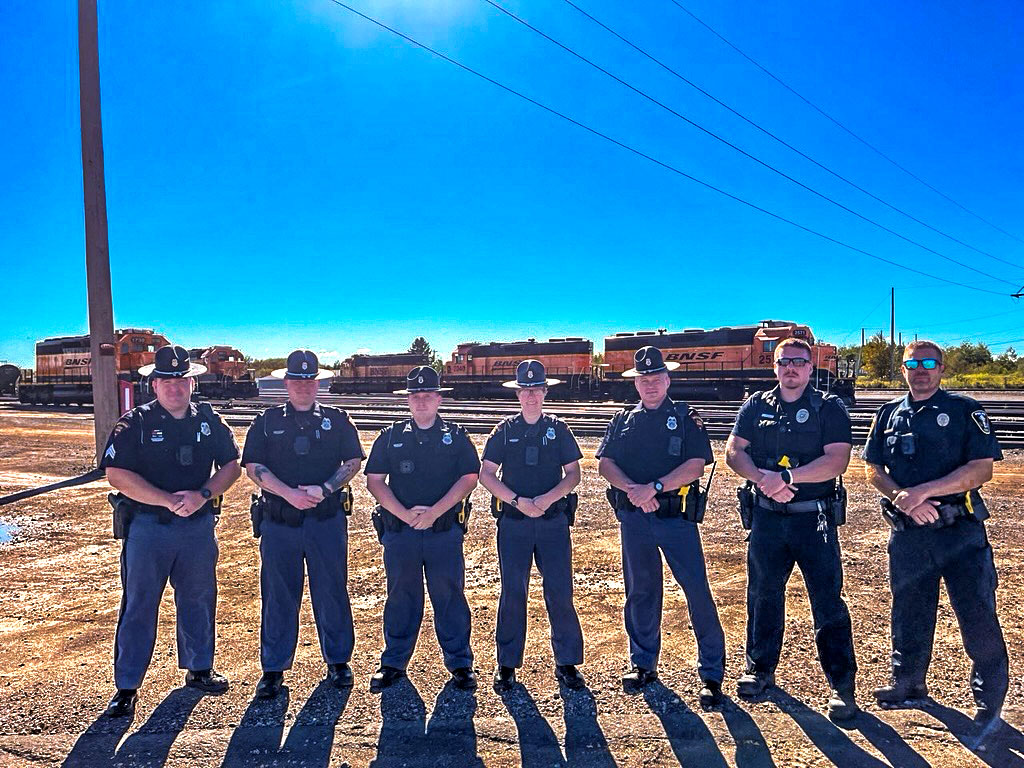
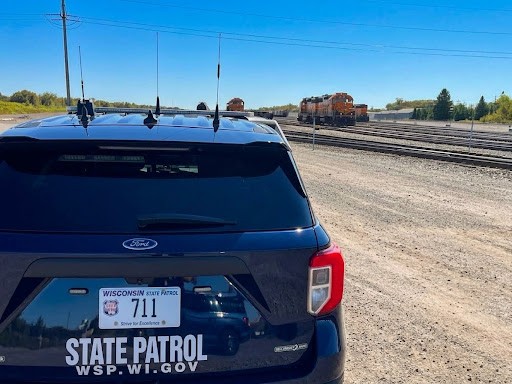
In a collaborative effort to raise awareness of railroad safety, the Wisconsin State Patrol yesterday joined railway police partners at rail crossing locations throughout Superior during Operation Clear Track, a nationwide education and enforcement campaign that takes place each year during
See Tracks? Think Train® Week.
“Rail safety awareness is vital in communities where the public may encounter tracks and trains while driving and walking," Wisconsin State Patrol Northwest Region Captain Craig Larson said. “We look forward to Operation Clear Track every year to connect with community members and help them make choices that keep themselves and others safe near railroads."
Wisconsin is home to 3,300 miles of active train tracks that are essential to the state's economy and connect travelers to their destinations. Because trains cannot make sudden stops, drivers and pedestrians should be extra vigilant when approaching railroad tracks to prevent serious crashes.
Over the past ten years, there have been 360 train related crashes in Wisconsin, and 86 of those were in the northwest region. The goal of See Tracks? Think Train® Week and Operation Clear Track is to reduce train related crashes, injuries and fatalities through increased public awareness.
During Operation Clear Track, the Wisconsin State Patrol and railway police were stationed at five rail crossings throughout Superior to remind community members of railroad crossing and trespassing laws and encourage safe choices around tracks and trains. They provided information to drivers and pedestrians and took enforcement when needed.
Navigating rail crossings
There are nearly 4,000 public rail crossings across the state. If you need to cross train tracks, be sure to obey all signs and signals posted at the designated pedestrian and roadway crossings. Some rail crossings do not have flashing lights and gates, so be sure to slow down, look both ways and listen for an approaching train. Distractions, such as phones and music, can prevent you from seeing or hearing an approaching train.
Drivers should also keep these safety tips in mind:
- State law prohibits drivers from going around lowered crossing gates or crossing closely to an approaching train. At ungated crossings, drivers should look for trains even when there are no warning lights activated.
- Do not stop on the tracks, even when there is no train in sight. In heavier traffic, a vehicle can get trapped in the middle of a crossing, which is very dangerous. To avoid this, make sure you have enough room to get all the way across the tracks before you start crossing them.
- If your vehicle stalls on the tracks, get out immediately and move as far away from it as possible. Then look for the blue Emergency Notification System sign with a phone number to call for help. If there's no sign, call 911.
- Stay back. When waiting for a crossing train, stay behind the painted lines on the road.
Pedestrians and bicyclists should consider the following to stay safe:
- Never walk or ride around lowered crossing gates. Wait for the train to pass and the gates to lift.
- Train tracks and rail yards are private property. Never walk on tracks. It is illegal and dangerous to trespass on rail property.
- A train can extend three feet or more beyond the rail, putting the safety zone for pedestrians well beyond the three-foot mark.
- If there are rails on the railroad ties, always assume the track is in use, even if there are weeds or the track looks unused.
- Cross at a 90-degree angle with a bike, scooter, stroller or wheelchair, to prevent your wheels from becoming stuck.
- Never stop on the tracks.
For additional information on rail safety, visit
wisconsindot.gov/Pages/safety/education/rail/default.aspx.
For more information, contact:
WisDOT Office of Public Affairs
(608) 266-3581,
opa.exec@dot.wi.gov