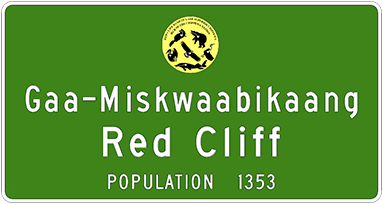
 From 2021-2026, the Wisconsin Department of Transportation (WisDOT) delivered on Wisconsin Governor Tony Evers’ promise to collaborate with the 11 federally recognized Tribes to provide dual-language road signs for all Tribes during his Administration’s tenure. These signs represent a statewide collaboration between WisDOT and the Tribal Nations in Wisconsin.
WisDOT is grateful for the opportunity to work with all 11 Tribal Nations to place dual-language signs on their lands. These signs are one way to ensure their culture, heritage and language are reflected in the transportation infrastructure.
The new dual-language signs help:
- Recognize Tribal sovereignty and government-to-government relationships.
- Preserve and increase visibility of Indigenous languages.
- Increase public awareness of Tribal Nations in Wisconsin and their histories.
- Provide a more inclusive transportation system that reflects the state's cultural heritage.
- Give a renewed sense of pride, identity, and belonging among Native people.
WisDOT developed a
dual-language sign policy to ensure the signs meet current standards based on Wisconsin's Manual on Uniform Traffic Control Devices. WisDOT Tribal Affairs worked closely with Tribal representatives to complete the
dual-language sign application.
Tribes welcome dual-language signs
| Red Cliff | Nov. 3, 2021 |
| Oneida Nation | Sept. 30, 2022 |
| Menominee Nation | Nov. 18, 2022 |
| Sokoagon Chippewa | Dec. 12, 2022 |
| St. Croix Chippewa | May 26, 2023 |
| Forest County Potawatomi | Nov. 6, 2023 |
| Lac du Flambeau Band | July 23, 2025 |
| Bad River Band | Sept. 17, 2025 |
| Ho-Chunk Nation | Dec. 4, 2025 |
| Lac Courte Oreilles | May 1, 2026 |
| Stockbridge-Munsee Community | June 30, 2026 |
Background on the dual-language sign program
The dual-language signs welcome travelers to Tribal communities in English and Indigenous languages. Dual-language signs join a long tradition of Native American language shaping our state. The names of many Wisconsin cities, lakes and landmarks are derived from Tribal languages.
Even our state’s name Wisconsin is a descendant of Native American language. The name Wisconsin comes from two different Tribal words the Menominee word Wēskōhsaeh, meaning "a good place," or the word Meskousing, which is a Algonquian language word that means “where it lies red.” “Where it lies red,” is thought to be a reference to the Wisconsin Dells.
Because Wisconsin is home to 11 different federally recognized Tribal governments, several different Tribal languages are present. Oconomowoc originates from Potawatomi and means “where the waters meet,” or “river of lakes.” Wausau comes from the Ojibwe word meaning “far away.”
The names of the cities of Kenosha and Manitowoc are derived from the Menominee language. Kenosha comes from the Menominee word Kenūsīw, meaning Northern pike. Manitowoc comes from the word Manetōwak, which translates to "place of the spirits."